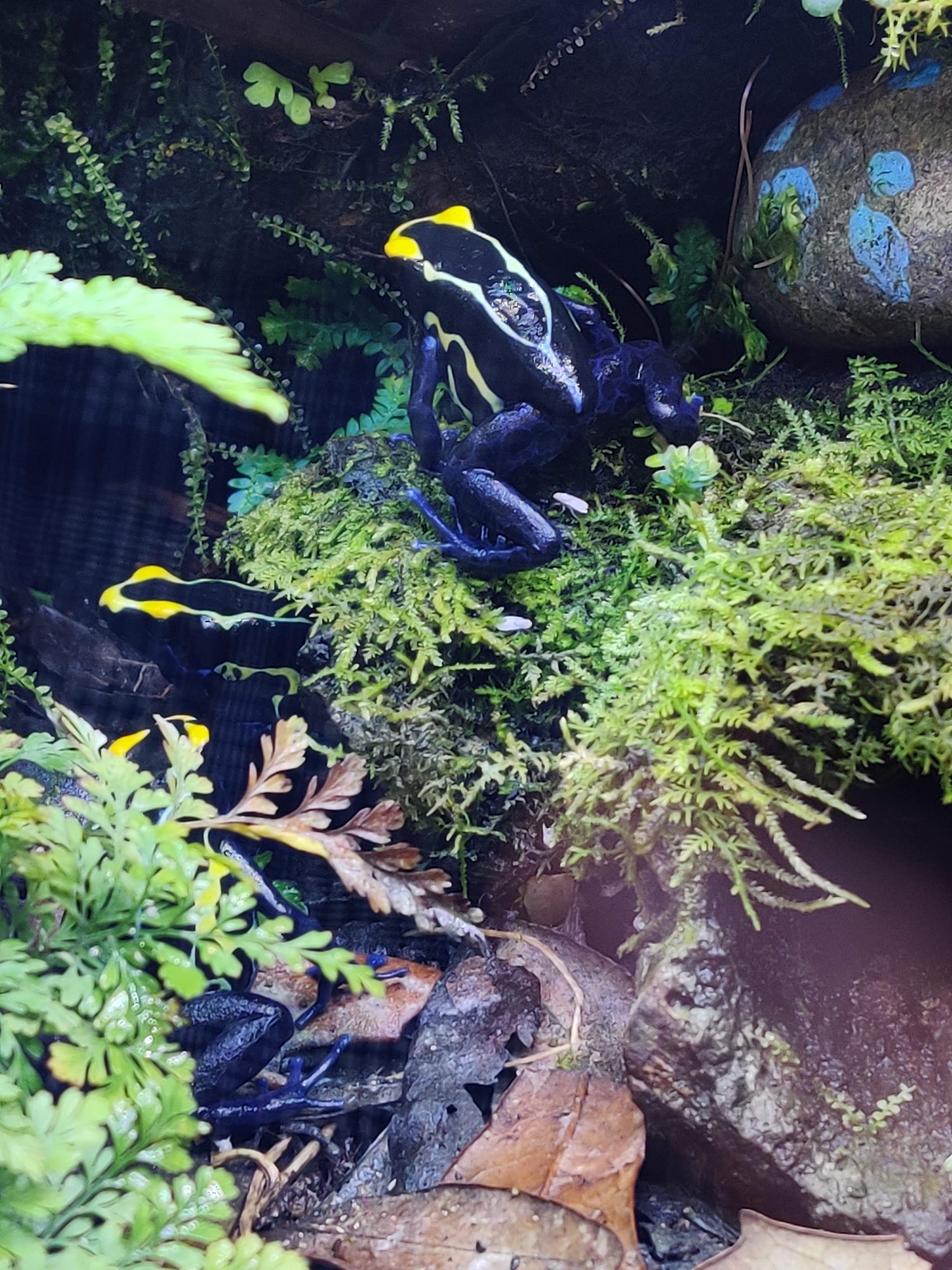
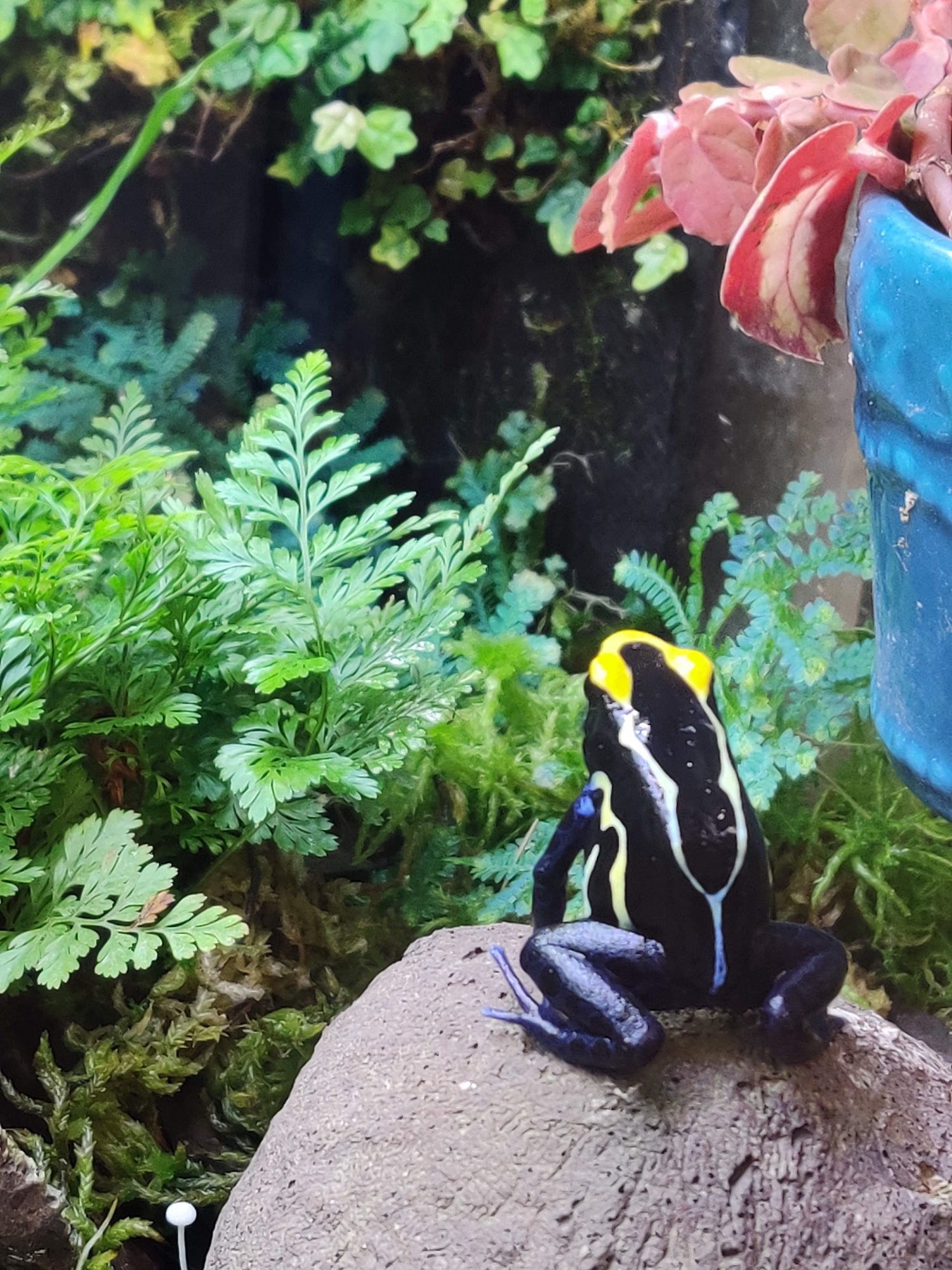
Plan the animals, room, and routine.
Research the exact species, choose a serviceable location, decide how daily and away-day care will work, and define what must be proven before occupancy.
Begin at Start Here → ™
™
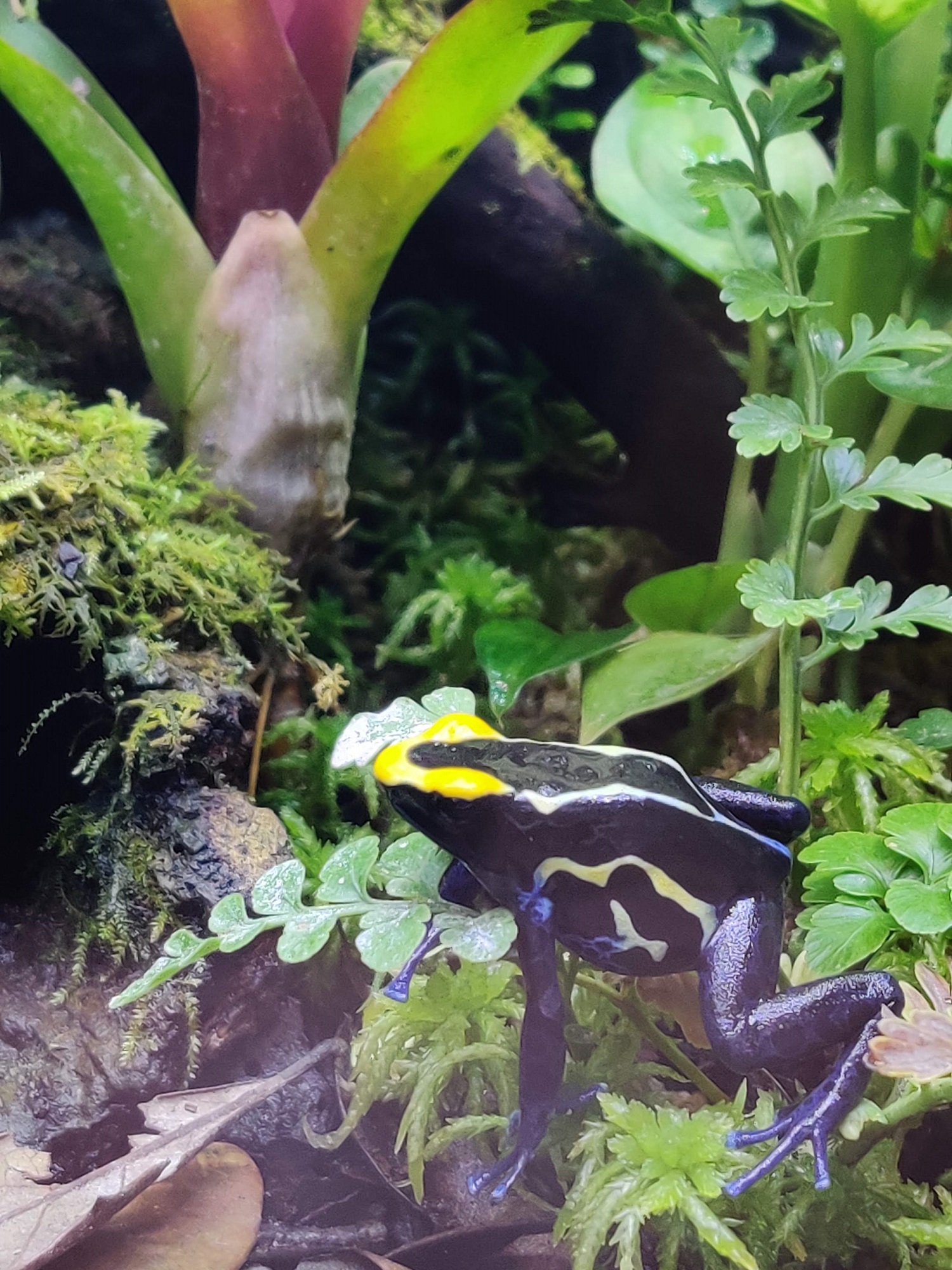
From my frog room to yours
Hands-on dart frog care, planted tank builds, and live environmental data from two working vivariums.
Start here
This is the site I wish I had when I built my first tank: a record of the enclosure I built, the routines I use, the mistakes I noticed, and the conditions I measure.
Browse the beginner path →How it started
I began with a planted terrarium and tried different plants, including carnivorous ones, because I wanted to see how the landscape looked. Once the project became a dart frog vivarium, the questions became more practical: where water collected, how much air moved, how the frogs behaved, and what the enclosure needed from me every day. This site is my working record of the build, the care routine, the photographs, and the sensor data.
The carnivorous plants in the early photographs were part of that visual experiment. They are not presented here as a dart-frog planting recommendation.
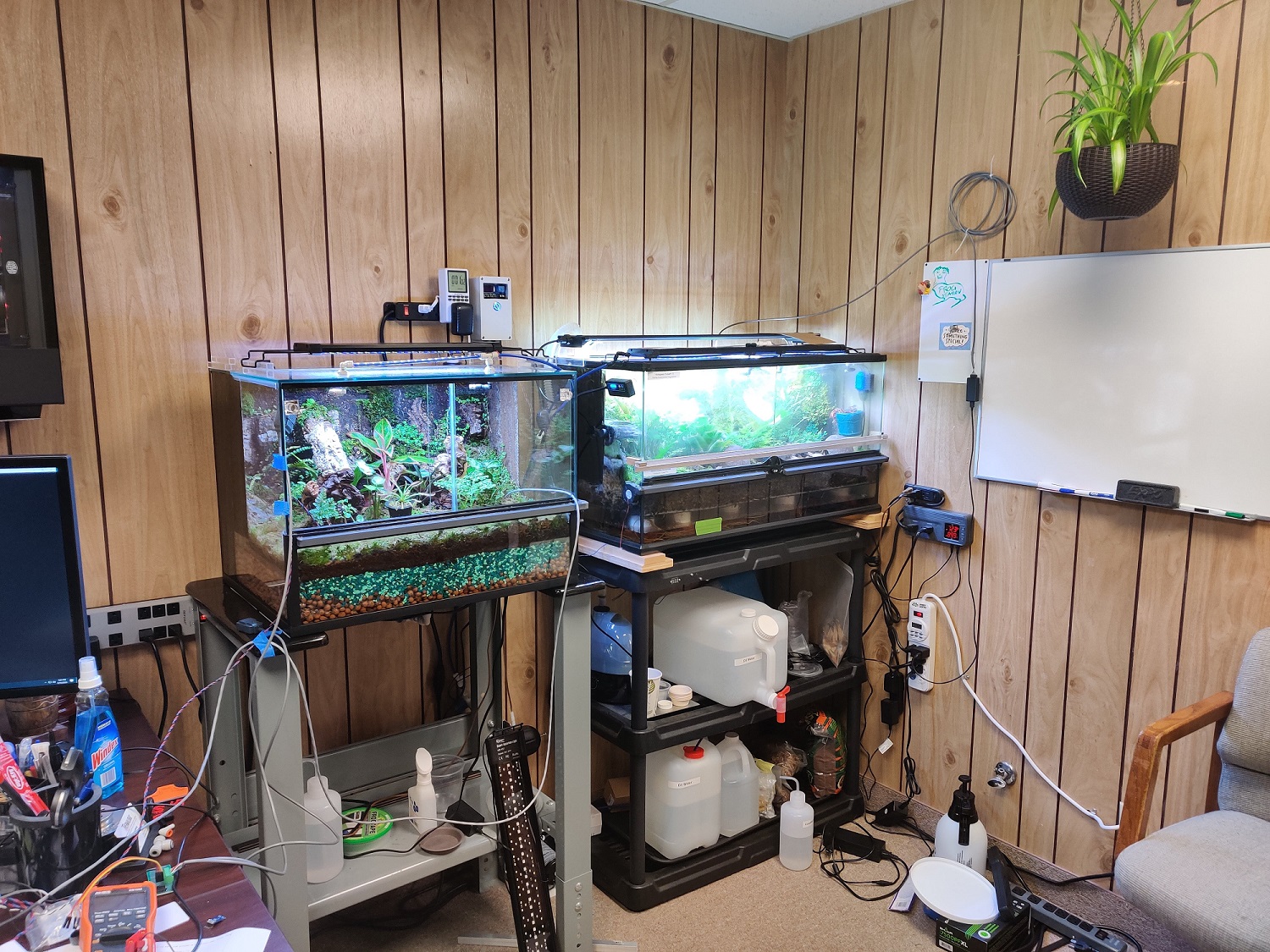
Use the site in this order
Each page answers the next practical question. Start at step one if you are new, or jump directly to the step you are working on.
Research the exact species, choose a serviceable location, decide how daily and away-day care will work, and define what must be proven before occupancy.
Begin at Start Here →Follow the glass, ventilation, drain, full-footprint false bottom, landscape, and service access before the visible planting hides them.
Follow the build →Prepare plants, add leaf litter and cleanup crew, run the equipment, and give the enclosure time to reveal drainage, misting, lighting, or airflow problems.
See planting and grow-in →Build a staggered fruit-fly culture pipeline and organize clean feeding tools and a species-specific supplement plan.
Set up feeder cultures →Check the enclosure, observe each frog, prepare and offer food, watch the response, clean up, and log the result in the same order.
Use the care workflow →Use recent sensor history and dated photographs to give context to what you see, then make deliberate changes one system at a time.
Read the live data →The build journal
Follow the complete build: drainage, background, planting, lighting, ventilation, misting, sensors, and what I would change next time.
Follow the complete buildBehind the data
The tanks report their climate through custom ESP32 hardware and Home Assistant. This site turns those readings into a public record of how the vivariums behave.
The newest value is only one part of the story. Freshness shows whether the sensor has checked in, the chart shows the shape of recent change, and minimum, maximum, and average make the selected time window easier to compare.
Learn how to read the dashboard →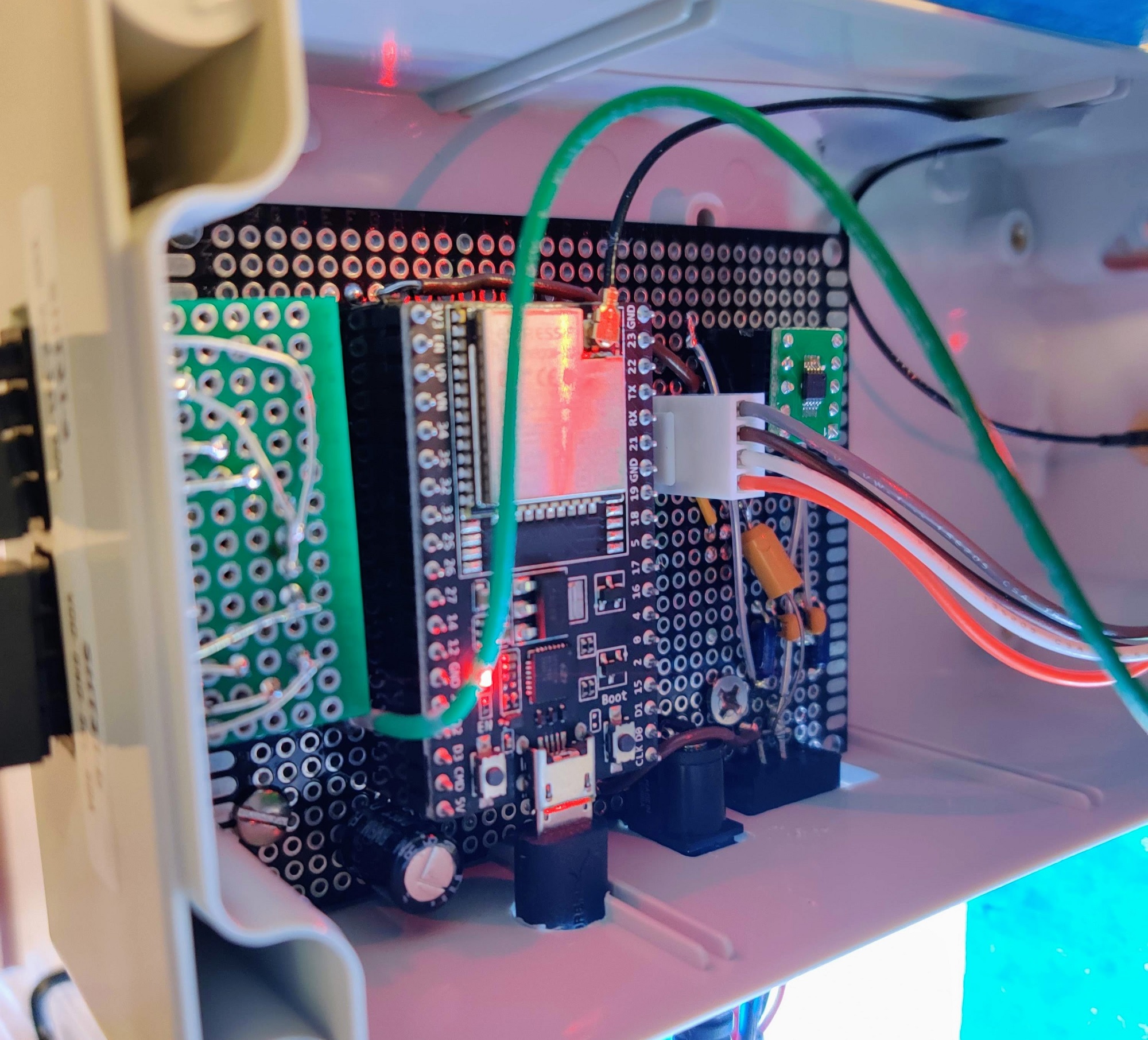
From the vivarium